


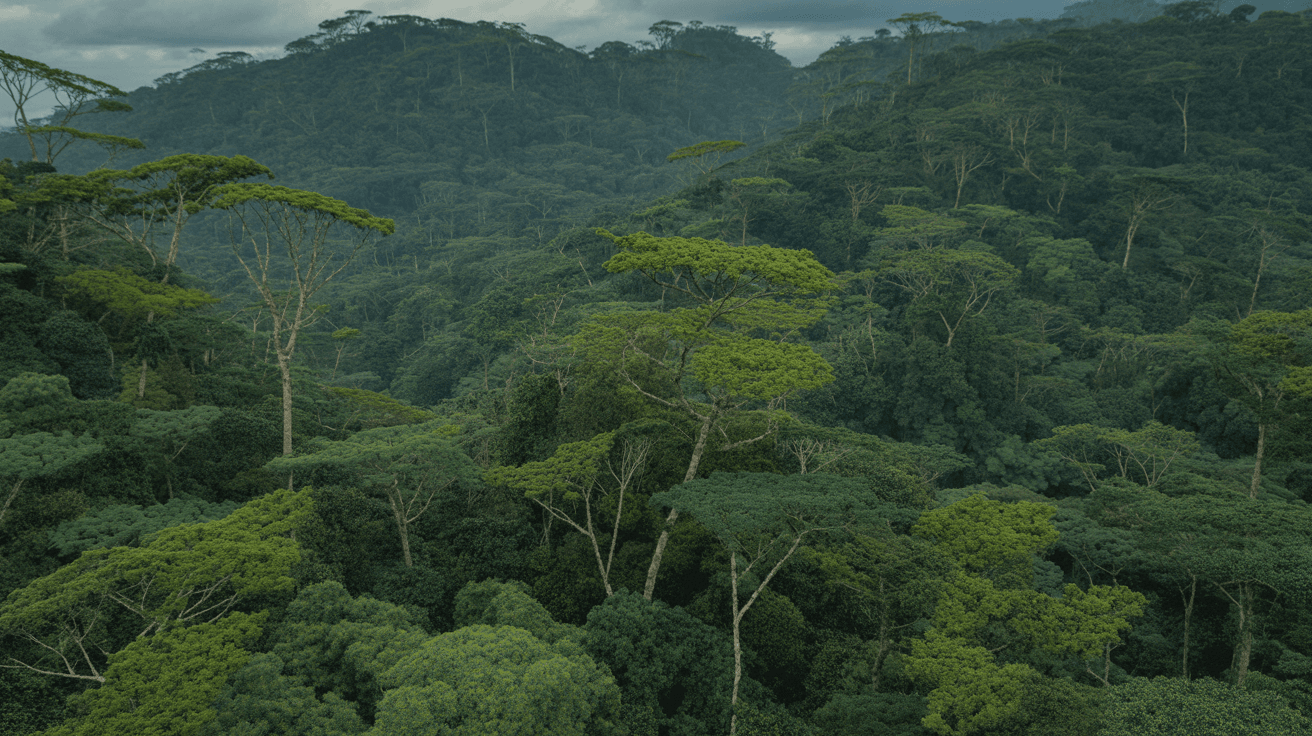



Flying Rivers: Agroforestry’s Epic Battle to Save the Amazon
The humid breath of 390 billion trees rises like a colossal serpent, 20 billion metric tons of water vapor coiling into rios voadores—flying rivers that command the skies, feeding rains across continents. But shadows creep: deforestation chokes the lifeblood, threatening the forest’s own weather.


Act I: The Fractured Canopy
🎒 OneMinuteExplore Shop
Curated gear for the modern explorer. Support our field research.
Degraded pastures and soybean sprawl devour the Amazon, slashing evapotranspiration by 80% compared to forests. Brazil’s Forest Code demands 80% native vegetation on private lands, yet 11 million hectares languish in debt. Enter agroforestry: a market-driven rebellion where native trees like açaí and cacao restore canopy while exploding incomes.

The Açaí Awakening
A family plots 10 hectares of açaí mini-plantations amid pasture: net income surges 140-200 times over cattle, yielding $240,000-$300,000 annually. Cacao groves along the Trans-Amazon Highway blend 1,000 trees per hectare under native shade, netting $4,200 per hectare—five times soybeans’ returns.
Act II: Economic Thunder
Across 280,000 properties, this scales to $95-125 billion in revenues, restoring 15-20 million hectares—25% of historical losses. Macauba-cattle systems crush monocrops by 10x, locking land from soy’s advance as Pará’s fields balloon to 5 million hectares by 2035. Partnerships like TNC and Amazon Inc. empower 3,000 Pará farmers with cocoa agroforestry, trapping carbon without clearing.

Forest Code’s Hidden Power
Clause X greenlights native agroforestry for compliance, flipping regulation into profit. Pair it with passive restoration—one hectare planted per agroforestry hectare—and biodiversity soars, stabilizing flying rivers against zero net deforestation.
Act III: Bio-Economy’s Dawn
SAFs mimic nature’s polycultures, enriching soils, fixing nitrogen, and boosting photosynthesis. From açaí to cacao, they outpace scale-economy monocultures, weaving conservation into commerce for a resilient Amazon. The flying rivers roar back, securing rains for all.
Did any of these facts surprise you? Drop a comment below! 💡
🔍 Common Inquiries
What are flying rivers in the Amazon?
Flying rivers are aerial moisture currents from 20 billion metric tons of daily evapotranspiration by 390 billion trees, driving continental rains.
How does agroforestry comply with Brazil’s Forest Code?
Article 2, Clause X allows native species in agroforestry for 80% legal reserve restoration on private Amazon lands.
What incomes can agroforestry generate?
Açaí yields 140-200x more than cattle ($20,000/ha net); cacao $4,200/ha; families earn $240K-$300K/year on mixed plots.
Why is agroforestry better than soybeans?
It outearns soy by 4-10x, restores evapotranspiration (soy at 20% of forest levels), and prevents further deforestation.
Can agroforestry restore the Amazon at scale?
Yes, 15-20 million hectares across 280,000 properties, generating $95-125B revenue and stabilizing flying rivers.
What partnerships support Amazon agroforestry?
TNC and Amazon Inc. aid 3,000 Pará farmers with cocoa systems, restoring rainforest and carbon sequestration.
#Agroforestry #AmazonRainforest #FlyingRivers #SaveTheAmazon #SustainableFarming #ClimateAction #BrazilForest #AcaiPower #CacaoRevolution #GreenEconomy
Enjoyed this story? Join our community on YouTube.