




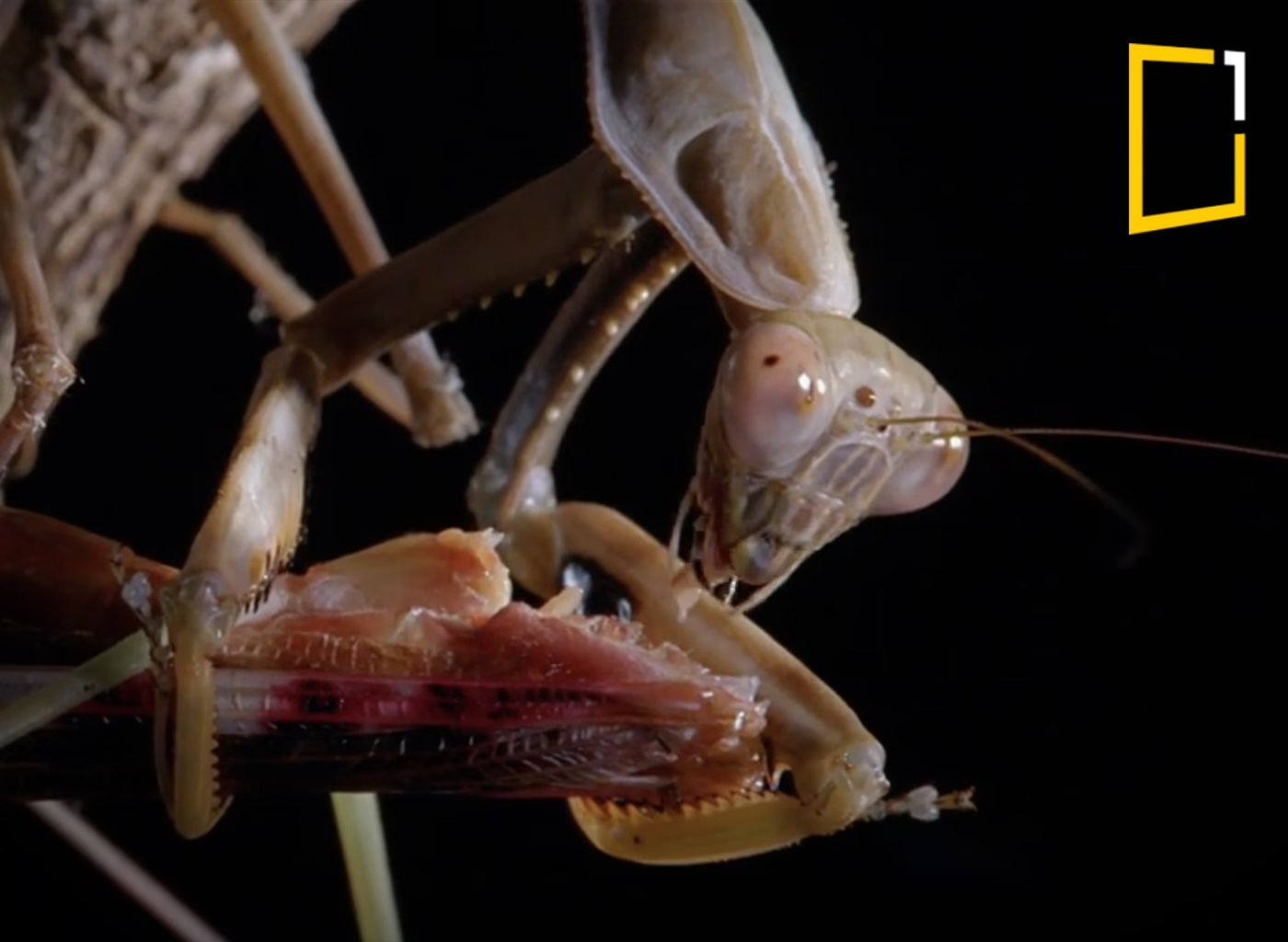

Winter mantises turn reproduction into a high‑risk, high‑reward calculation where death is part of the design. Sexual cannibalism is not random violence—it is a reproductive strategy that can boost the number and quality of offspring.


The mantis: beauty with a built‑in execution
The praying mantis looks almost spiritual—forelegs folded like hands, head turning with eerie composure, eyes locked in alien focus. But behind that calm posture is a predator so efficient it can snatch hummingbirds from midair and process depth with 3D vision using a fraction of the neurons humans have.
Mantises sit motionless, then explode into action: a strike takes milliseconds, spined forelegs snap shut, and escape becomes nearly impossible. The same tools used to shred crickets and birds are also turned—sometimes—on the male that dares to mate with the female.
Quiz ❓
Why does the female eat the male during mating?
- A) Pure aggression
- B) Hunger
- C) To increase the survival of her offspring
- D) By accident
👇 Comment your answer!

🦈 Love sharks?
Check out our Shark-Themed Phone Cover — inspired by the power and mystery of these ocean hunters.
👉 Buy now
Why female mantises eat the male
Sexual cannibalism—eating the mate during or after sex—doesn’t happen in every mating, and not in every mantis species. But where it does occur, the pattern is striking: hungry, high‑energy females are far more likely to kill and consume the male.
Research on Chinese mantises shows that when a female eats the male, she gains key amino acids that end up in her eggs, and females that cannibalize their mates can lay up to roughly 25% more eggs—about 50 extra in one study. In other words, the male’s body is converted into fuel for his own offspring: a “living nuptial gift” whose calories become more hatchlings carrying his genes.
So, from an evolutionary perspective, the best answer to the quiz is:
C) To increase the survival of her offspring. The behavior is tied to nutrition and reproductive success, not pure aggression or accident.
How fertilization continues after decapitation
The most unsettling detail is that decapitation doesn’t necessarily stop mating. In many documented cases, the female bites off the male’s head while he is mounted—and his body keeps going.
Control of mating movements in mantises is distributed: nerve centers in the abdomen can continue to drive copulation even when the brain is gone. Experiments and field observations show that headless males may thrust more vigorously, increasing the chances of successful sperm transfer while the female eats.
For the male, this means that death isn’t the end of his role; his body becomes both a delivery system for sperm and a protein package for the female’s eggs.
Survival logic: when sacrifice pays off
To human eyes, this looks like horror. To evolution, it’s arithmetic.
- For the female, a large, protein‑rich meal right at egg‑laying time is priceless in ecosystems where food is patchy and unpredictable. Each extra gram of nutrition can translate into more eggs, better‑provisioned embryos, and higher survival rates for her offspring.
- For the male, his options are brutal: he can mate once and die as food, or might survive to mate again—but many won’t get even a single chance. If sacrificing his body boosts the number of offspring he sires from that one mating, the “suicidal” strategy can still be favored by natural selection.
This is why scientists describe sexual cannibalism in mantises and spiders as an extreme form of parental investment, where the male’s final act is to become energy for his own genes.
The deeper pattern in nature’s design
Mantis cannibalism is not constant chaos; it’s part of a wider playbook where survival and reproduction override individual safety. Cannibalism appears in many animals—from fish and invertebrates to mammals—when conditions demand ruthless efficiency.
Mantises add another layer: risk and strategy. Males creep in slowly, sometimes with elaborate courtship behaviors thought to reduce the chance of being eaten, and some species appear to have evolved dances or approach tactics that lower the odds of post‑mating cannibalism. Females, in turn, balance hunger, body condition, and opportunity; cannibalism is more likely when food is scarce or when a male is simply too close and too slow to escape.
Seen this way, the praying mantis is less a monster and more a razor‑sharp example of what life will do to persist. Sometimes, survival really does demand the ultimate sacrifice—from the one who mates, knowing that if his body feeds the next generation, his brief life has still succeeded in nature’s strict accounting.
FAQ
Cannibalism depends on species, hunger level, and conditions. Some species rarely show it, and even in cannibalistic species, females
It happens in both, but appears more common in laboratory or captive settings where space and food are limited. In the wild, females may have more prey choices and do not need to eat every mate.
There’s no evidence of conscious awareness in the human sense, but males show cautious, stealthy approaches and evasive behaviors that suggest strong evolutionary pressure to reduce the risk of being eaten.
—————————————————————
Thanks for joining this ride. Stay curious, stay tuned, and let’s make our world brighter!
Subscribe to our channel and stay tuned for more intriguing mysteries and scientific wonders. Together, let’s uncover the secrets of the Earth and expand our understanding of this fascinating world.
Check out the latest blog and video on YouTube and learn something new today.
Attention, all readers! To deepen your understanding and stay informed on the latest news and trends, be sure to click on the link to access more informative articles.
Join the family by liking us on Facebook, or follow us on Twitter and Instagram.
If you liked this story, sign up for the weekly OneMinuteExplore features newsletter called “The Essential List”. A handpicked selection of stories from OneMinute Nature, Wildlife, Culture, Travel, Stories, and more… delivered to your inbox every Weekend.
👉 We may earn a commission from purchases made through links in this content, but it won’t affect your price. Rest assured, our recommendations are based on thorough research and genuine belief in the products. Your support through these links helps us continue providing valuable content. Thank you for being so supportive!