

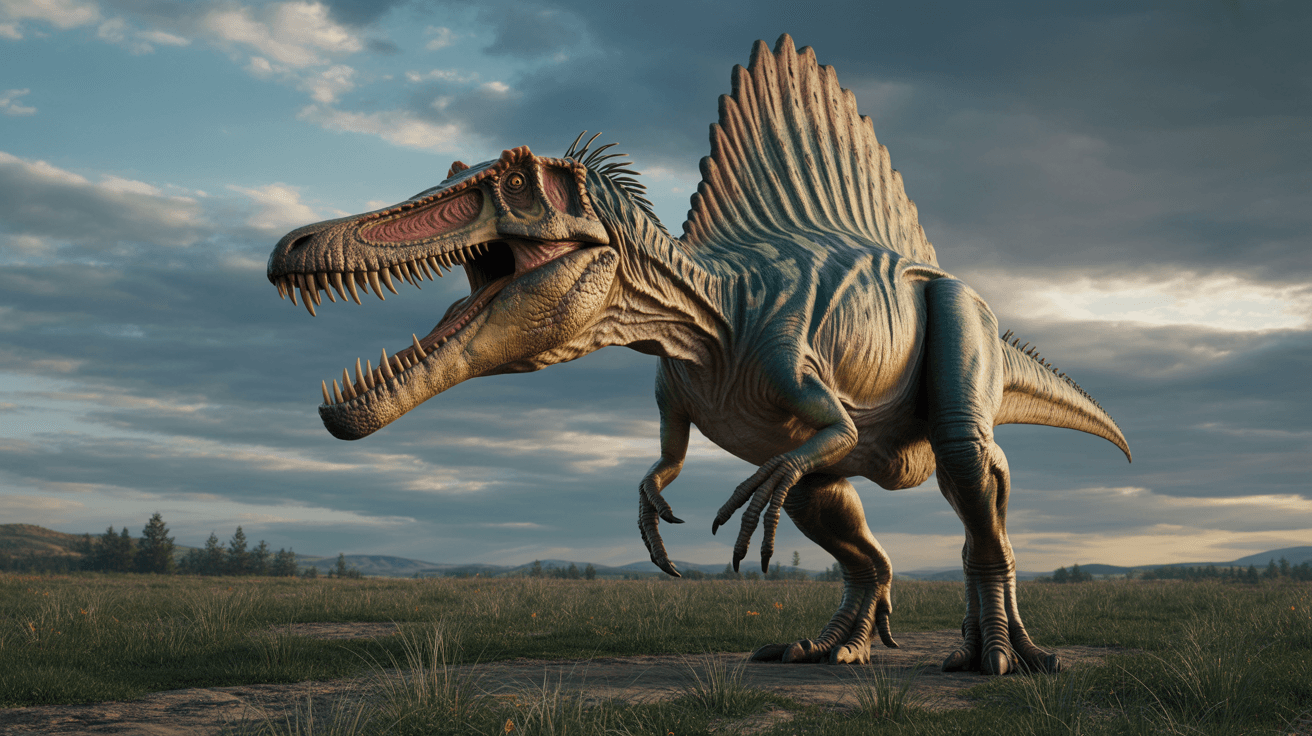

Sahara’s Scimitar Shadow: The Astonishing Hunt for Spinosaurus Mirabilis
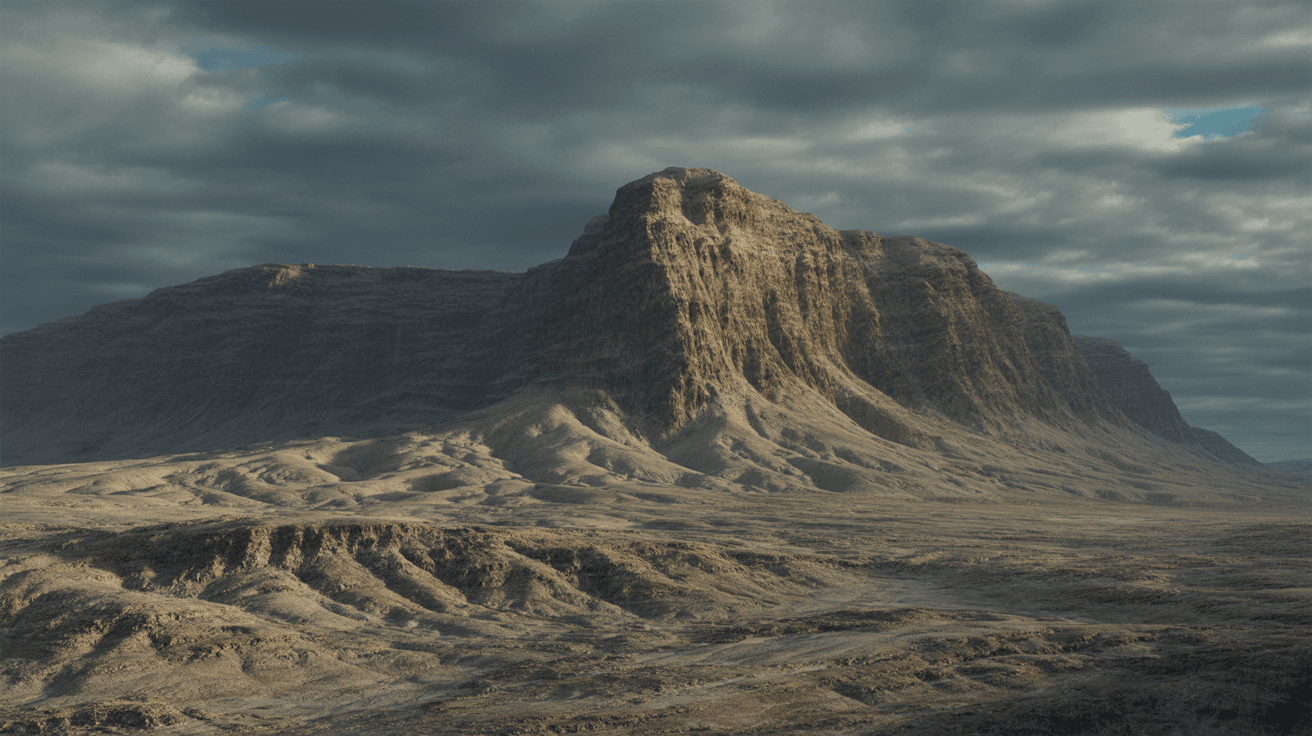
Sand whispers secrets across endless dunes as the sun bleeds crimson over the Sahara, a lone Tuareg guide revs his motorbike into the haze, leading shadowed figures toward bones buried for 95 million years.


Act I: The Forgotten Tooth
🎒 OneMinuteExplore Shop
Curated gear for the modern explorer. Support our field research.
In the 1960s, a French geologist scribbled a single line about a dinosaur tooth in Niger’s remote sands—no photos, no proof. Decades later, Paul Sereno, University of Chicago professor and National Geographic Explorer, fixates on that clue. Drones hum over sand seas in 2019, pinpointing the site, but bigger fossils elude them.
The Tuareg’s Call
At camp, a local Tuareg appears, eyes gleaming: “I know where big bones lie.” Gas cans strapped tight, they plunge into the Erg of Bilma, doubts rising like heat mirages. After a day and a half, panic grips as fuel dwindles—then, the jackpot: massive Spinosaurus teeth and jaw fragments glint in the dying light.
Act II: Crest of Destiny
Back in the lab, scans reveal the extraordinary: a scimitar-shaped cranial crest, extended and curved like a blade, unlike any known Spinosaurus. Small blood channels hint at a keratin-covered horn, vividly colored, towering on this school-bus-sized fish-eater. Spinosaurus mirabilis—’astonishing’ in Latin—is born.
Solar-Powered Revelation
2022 expedition: 20 scientists, 64 armed guards, grenade-launcher trucks. Day one, researcher Dan Vidal unearths a crest fused to skull. Around a solar-powered laptop in camp, 3D models assemble—the team weeps. “This find was so sudden and amazing,” Sereno recalls. Interlocking teeth scream piscivore: a ‘hell heron’ stalking shallow waters for giant fish, legs sturdy, far from coasts.

Act III: Echoes of a Green Sahara
No swimmer, this inland giant rewrites spinosaur lore, bridging North Africa to Brazil across a lush prehistoric Sahara. Sereno’s zero-energy Museum of the River in Niamey will house these 55 tons of fossils, unveiling Africa’s lost dinosaur realm. The Sahara, daunting yet magnetic, yields its ghosts to the brave.
Legacy Unearthed
From Jobaria in 1999 to Mansourasaurus in 2018, Niger’s sands pulse with history. Mirabilis graces Science‘s cover, a final spinosaurid chapter. “If you brave the elements,” Sereno urges, “you might uncover a lost world.”

Did any of these facts surprise you? Drop a comment below! 💡
🔍 Common Inquiries
What is Spinosaurus mirabilis?
A new spinosaurid dinosaur species discovered in Niger’s Sahara, named for its astonishing scimitar-shaped cranial crest. Roughly T. rex-sized, 95 million years old, a fish-eating predator with interlocking teeth.
Who led the discovery?
Paul Sereno, University of Chicago professor, with a 20-person international team across 2019 and 2022 expeditions. Local Tuareg guides were pivotal.
How was the crest unique?
Dramatic scimitar form with blood channels suggesting a keratin-covered, colorful horn. Differentiates it from Spinosaurus aegyptiacus.
What challenges did the team face?
Remote sand seas, low fuel, security with armed guards. Used drones, GPS, solar-powered 3D modeling in the desert.
Was it aquatic?
No—evidence shows sturdy legs for wading shallow waters inland, hundreds of miles from coasts, like a ‘hell heron’.
Where will fossils be displayed?
World’s first zero-energy Museum of the River in Niamey, Niger, showcasing Africa’s dinosaur patrimony.
#SpinosaurusMirabilis #NewDinosaur #SaharaDiscovery #DinoHunt #Paleontology #LostWorld #Spinosaurus #DinosaurFossils #ScienceBreakthrough #PrehistoricPredator
Enjoyed this story? Join our community on YouTube.