

Perseid Meteor Shower 2026: What Makes This Year Special?
The Perseid meteor shower 2026 is set to be one of the best sky shows of the decade, and for once, the conditions are on your side. In 2026, the Perseids peak around 13 August under a dark, new moon sky, which means far more visible meteors than in most years.[3][5] That combination of timing and darkness can turn a simple summer night into a rare, almost primal experience of Earth flying through comet dust.


The Perseids come from debris left behind by comet Swift–Tuttle, and in a good year observers can see well over 100 meteors per hour at peak from dark locations.[3] In 2026, both professional astronomers and casual campers are watching this one closely.
Key Facts: When, Where, and What You’ll See
Peak Dates and Best Time of Night
The Perseid meteor shower is active from about 17 July to 24 August, but 2026’s peak is expected around the night of 13 August into the early hours of 14 August.[3][5]
- Best viewing window: roughly midnight to pre-dawn, when your local sky is darkest and the radiant is higher.[3]
- Moon phase: near new moon, so moonlight will not wash out faint meteors, making this an unusually favorable year.[3]
- Expected rate: up to around 150 meteors per hour under very dark, clear skies for experienced observers; casual viewers may see fewer, but still a striking display.[3]
Where to Look in the Sky
Meteors appear to radiate from the constellation Perseus, in the northeastern sky for most Northern Hemisphere observers.[3] You don’t need a telescope or binoculars; in fact, you will see more with the naked eye.
For viewers in the USA, UK, Canada, Germany, and much of Europe, the Perseids are ideally placed high in the sky during the second half of the night.[3] Southern Hemisphere observers will still see some meteors, but at lower rates.
Planning Your Trip: Dark Skies and Realistic Expectations
Think of Perseid watching less like a fireworks show and more like slow, celestial weather. You may wait a few minutes with nothing, then suddenly catch several bright streaks in a row.
Choosing a Location
The single biggest factor is light pollution. Urban and suburban glare can cut your meteor count dramatically.
- Seek out rural areas, national parks, coastal headlands, or highland areas with low light pollution.
- Avoid direct lights: streetlamps, car parks, resort floodlights, and campsite LEDs.
- Give your eyes 20–30 minutes to adapt to the dark.
If you’re new to dark-sky planning, you may also want to read night-focused safety tips similar to those used in remote desert and island trips on OneMinuteExplore.com, such as in our remote-island and blackout-travel guides.
What Gear You Really Need
You don’t need expensive optics for meteor watching, but a small amount of planning goes a long way:
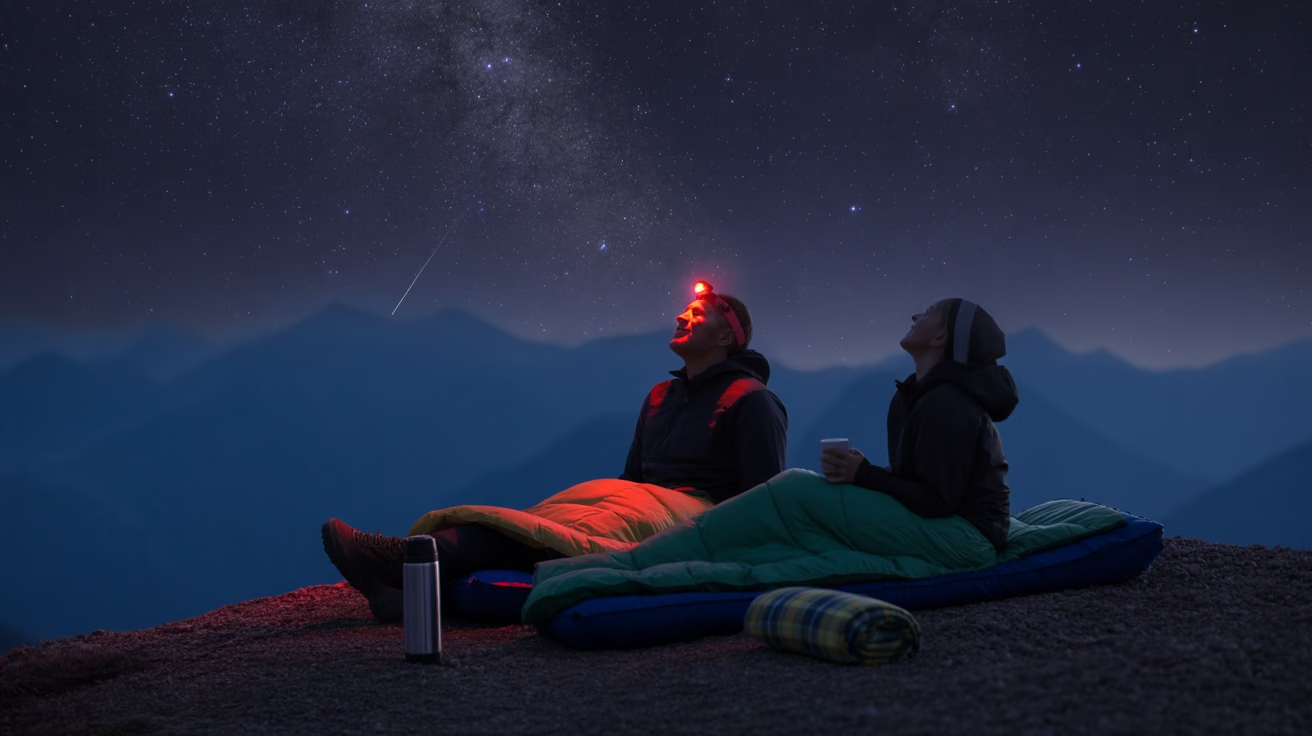
- Insulation and comfort: sleeping pad, warm layers, hat, and gloves, even in August at higher elevations.
- Red-light headlamp: preserves night vision while moving around; avoid bright white beams.
- Reclining chair or blanket: neck strain is one of the most common complaints.
- Backup navigation: downloaded offline maps or a paper map if you’re driving into remote areas.
For compact, travel-ready stargazing essentials, you can browse the curated night-sky and travel gear in our shop, which focuses on low-bulk, field-tested items.
Hidden Risks Most Travelers Don’t Expect
Because the Perseids are so widely publicized, the main risks are not from the sky, but from human behavior and underestimating the dark.
Night Driving and Remote Roads
Many people drive to remote lookouts or backroads late at night, when fatigue and wildlife crossings peak.
- Plan your route in daylight and note hazard spots like sharp bends, gravel sections, or unfenced pastures.
- Share your plans and expected return time with someone at home or at your accommodation.
- Use marked pull-outs or designated parking areas, never the blind crest of a hill or narrow shoulders.
In some regions, deer, elk, kangaroos, or wild boar are more active at night, increasing collision risk. Locals and park rangers often have the most practical advice; their warnings resemble those shared in backcountry hiking pieces on OneMinuteExplore.com.
Temperature Drops and Exposure
Even in mid-summer, clear, dry nights can turn surprisingly cold, especially in mountains or deserts.
- Prepare as if it will be 10–15°C colder than the daytime forecast suggests.
- Bring a windproof outer layer; wind chill can make a quiet hilltop feel harsh.
- Keep a thermos of hot drinks and extra dry socks.
Hypothermia during skywatching is rare but does happen when people underestimate how long they’ll lie still under clear skies.
Costs, Insurance, and Safety Factors to Consider
If you’re staying close to home, the Perseids can be nearly free. But travelers chasing the darkest skies often treat this like a mini-expedition.
Typical Costs for a Perseid Trip
- Transport: fuel or rental car costs rise if you need to drive several hours to a dark-sky reserve.
- Accommodation: remote cabins, rural B&Bs, or campgrounds often book out around mid-August in well-known dark-sky regions.
- Park fees: some national parks and reserves charge per vehicle or per person, even at night.
Budget a small margin for last-minute changes, especially if weather forces you to move locations to find clear skies.
Insurance and Medical Considerations
For cross-border trips, basic travel insurance can still matter, even for a short meteor-focused weekend.
- Check coverage for night driving accidents and rural medical facilities.
- Verify that your plan covers outdoor activities like hiking to a viewpoint after dark.
- Carry any essential medication on your person, not in a parked vehicle far away.
If your Perseid trip combines with other adventure activities—such as high-altitude treks or off-grid camping—consider the same level of preparation recommended in high-risk destination guides on OneMinuteExplore.com.
Mistakes Tourists Commonly Make During Meteor Showers
Most problems come from assumptions: that it will be warm, that the sky will instantly perform, or that a smartphone is all you need.
Overreliance on Screens
Bright phone screens reset your night vision every time you check them.
- Switch to red filter or dark mode and keep brightness to a minimum.
- Download star maps or meteor shower guides for offline use.
- Avoid trying to photograph every meteor; most phone cameras will miss them, and you’ll miss the moment.
Ignoring Local Rules
In popular national parks, rangers often deal with people blocking roads, walking into sensitive habitat at night, or lighting illegal campfires.
- Read and follow posted signs about night access, fire bans, and wildlife protection.
- Use existing paths; wandering off-trail in the dark can damage fragile vegetation and increase your risk of falls.
- Keep noise low—many nocturnal animals are hunting or nesting during those hours.
For a deeper look at how night conditions change animal behavior, you can explore similar wildlife-impact discussions in our pieces on remote islands and volcanic landscapes on OneMinuteExplore.com.
Who Should Avoid Remote Perseid Trips?
Not everyone benefits from traveling far into the dark for a meteor shower, even in a year as good as 2026.
- Travelers with significant night vision issues or dizziness in the dark.
- People with serious heart or respiratory conditions planning high-altitude lookouts.
- Anyone uncomfortable with remote settings, especially if traveling alone.
These travelers may be better served watching from a safer, semi-rural edge-of-town location, accepting fewer meteors in exchange for easier access to help and facilities.
What Experts and Observatories Recommend
Astronomy institutions recommend a surprisingly simple formula for enjoying the Perseids: dark sky, patience, and warm clothing.[3]
- Arrive early so your eyes adjust and you can spot trip hazards while there is still some light.
- Lie back so you can see as much of the sky as possible rather than staring at one small patch.
- Stay at least an hour; meteor rates fluctuate, and the longer you watch, the more likely you are to see bright fireballs.
For those interested in more than casual viewing, some observatories and astronomy clubs offer guided Perseid nights with talks, red-light policies, and safe viewing areas.
Is the Perseid Meteor Shower 2026 Really Worth Traveling For?
Because 2026 combines the Perseid peak with a new moon and mid-summer weather for much of the Northern Hemisphere, many skywatchers consider it a “must-see” year.[3][5][6]
If you already live near dark skies, staying local and planning thoughtfully is enough. But if you have been waiting for the “right year” to plan a dedicated meteor-watching trip, 2026 is one of the more promising windows.
The key question is not just how many meteors you will see, but what kind of night you want to remember: a quiet hillside with a few close friends, a family campout under a slow rain of light, or a more social gathering with a local astronomy group.
Final Thoughts
The Perseid Meteor Shower 2026 won’t last long, but the memory of watching comet dust burn above a silent landscape often does. With a dark sky, a safe plan, and realistic expectations, you can turn a single night into one of your most vivid travel experiences.
If you are planning a night under the Perseids, consider pairing it with other low-light explorations—bioluminescent bays, volcanic skylines, or remote coasts—to build a quiet, connected journey. Let the meteors be your excuse to step back from noise, lie down, and simply watch Earth move through space.