



The Frozen Giant: How a Forgotten Fossil Rewrote Antarctica’s Ancient History
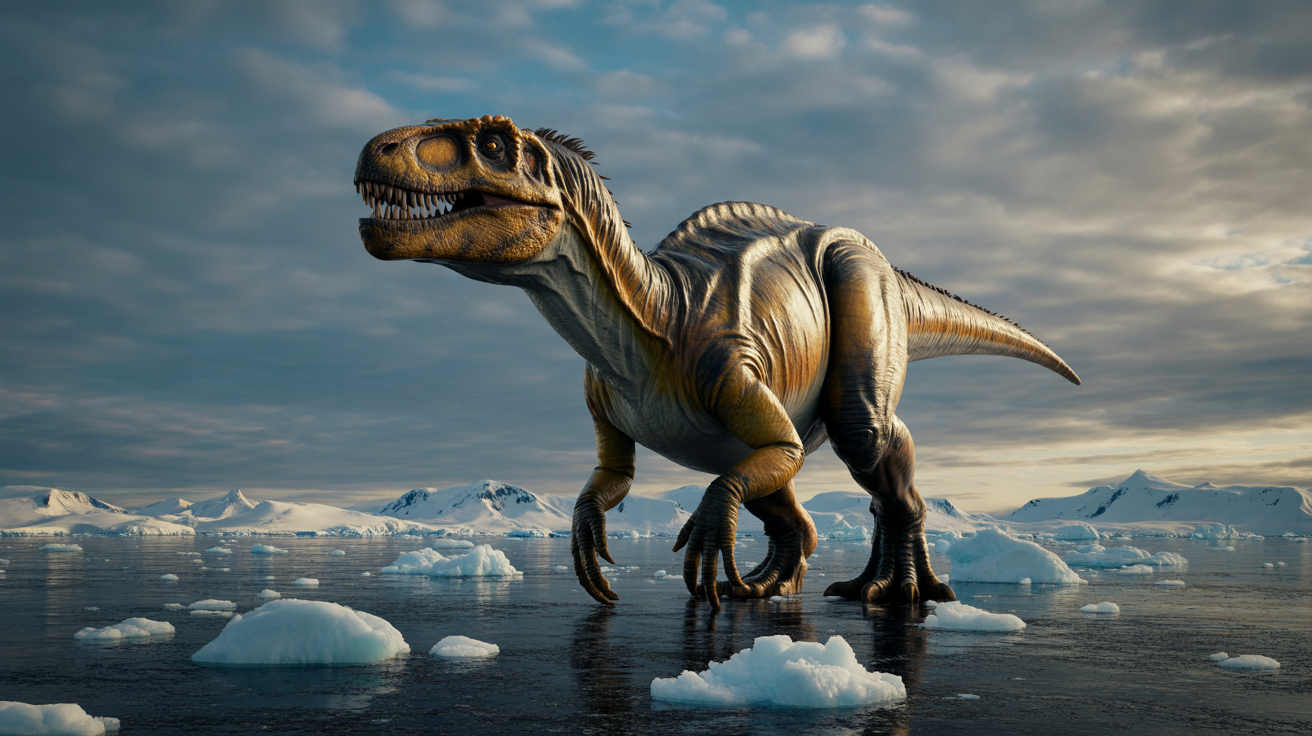
The drawer slides open with a soft scrape. Not in a polar research station, but in a museum storeroom far from the ice. Inside, nestled among other forgotten specimens, lies a fragment of stone and bone. It feels cold to the touch, a lingering echo of its origin. This unassuming piece, collected in 1985 and filed away, is the first dinosaur bone ever discovered in Antarctica. It is the tail vertebra of a Titanosaur—a gentle, long-necked giant that once roamed a continent now locked in ice.
Act I: The Forgotten Expedition
🎒 OneMinuteExplore Shop
Curated gear for the modern explorer. Support our field research.
In the mid-1980s, a scientific team braved the brutal winds and endless white of Antarctica’s Beardmore Glacier region. Their mission was geological, but among the rocks, they collected a curious, heavy specimen. It was bagged, tagged, and shipped back to New Zealand. There, it entered the labyrinth of a museum collection—a puzzle piece without a clear picture. For years, it sat in a drawer, its true significance sleeping.

Act II: The Rediscovery
The moment of rediscovery was not on a glacier, but under the hum of fluorescent lights. A curious researcher, pulling drawers and revisiting old catalogs, lifted the bone. The scale and texture were unmistakable to a trained eye. This was not just any rock. Analysis confirmed it: a sauropod. A Titanosaur. The bone whispered of a time, 70 million years ago, when Antarctica was a lush, green haven on the edge of the ancient supercontinent Gondwana.
A World of Forests, Not Ice
Imagine a landscape alien to today’s frozen desert. Towering conifers and lush ferns stretched to horizons warmed by a sun that never set in the summer. Rivers cut through verdant valleys where this Titanosaur, and perhaps herds of its kind, browsed the canopy. The discovery proved these colossal herbivores weren’t just passing through; they thrived here.

Act III: The Legacy in the Ice
The bone is more than a fossil; it’s a key. It forces us to redraw the map of dinosaur migration and evolution. If Titanosaurs lived in Antarctica, they walked between continents that were still loosely connected. Their presence hints at a warmer planetary past and underscores the dramatic, transformative power of Earth’s climate shifts. This single bone opened a portal, proving that the most extreme environments on Earth often guard the deepest secrets.
The Modern Explorer’s Pilgrimage
For the intrepid traveler, Antarctica is no longer just a realm of penguins and icebergs. It is the stage for this ancient drama. Visiting the Antarctic Peninsula or seeing the Transantarctic Mountains today is to walk (or sail) in the footsteps of giants. The bone connects the stark, beautiful silence of the present to the rustling, vibrant chorus of the deep past.

Did any of these facts surprise you? Drop a comment below! 💡
🔍 Common Inquiries
What was the first dinosaur found in Antarctica?
When and where was the fossil discovered?
What is a Titanosaur?
What does this discovery tell us about ancient Antarctica?
Can I see the fossil in Antarctica?
Why are dinosaur fossils so rare in Antarctica?
#FrozenGiants #LostWorld #AntarcticaSecrets #Titanosaur #DinosaurDiscovery #AncientAntarctica #Paleontology #TravelBackInTime #Gondwana #ExploreThePast
Enjoyed this story? Join our community on YouTube.